|
Click on Pix for high resolution.
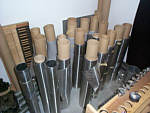
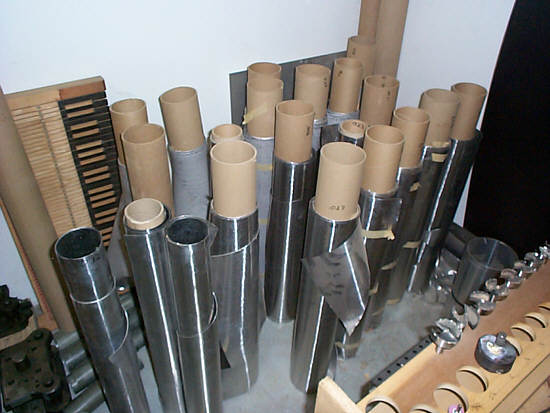
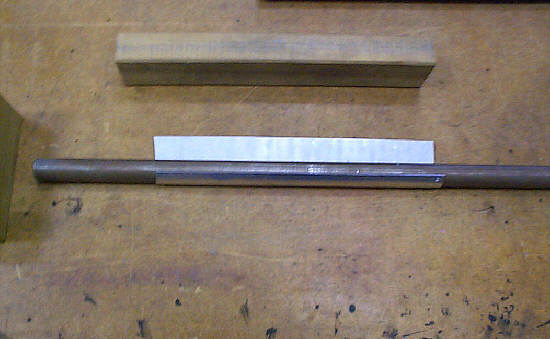
Metal for new pipes.
|
Click on Pix for high resolution.
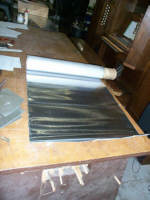
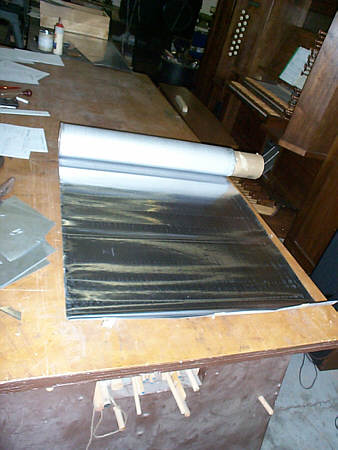
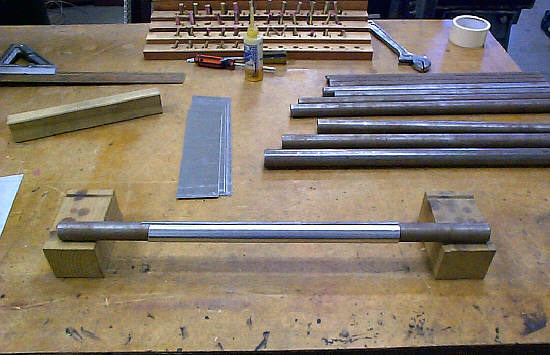
Preparing to cut out new pipes.
|
|
Click on Pix for high resolution.
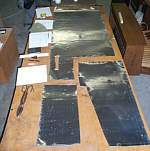
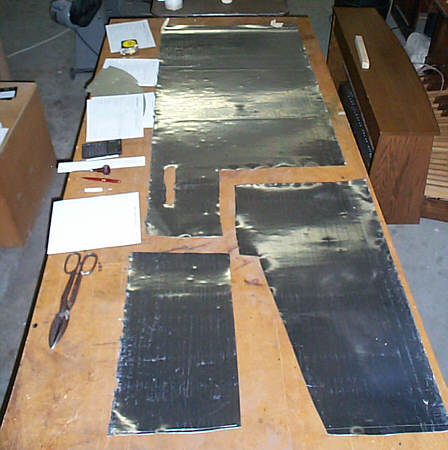
Cutting out new pipes.
|
Click on Pix for high resolution.
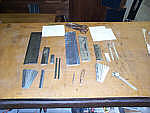
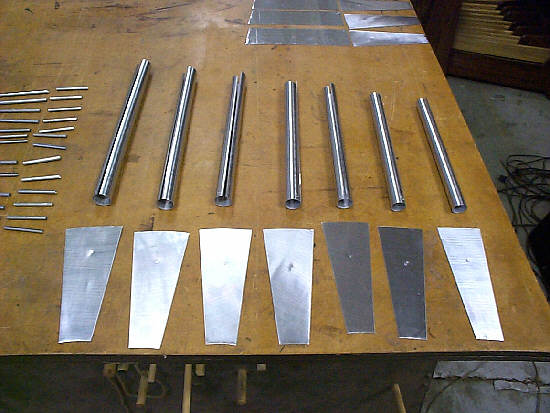
Swell Tierce and Larigot pipes are ready
to be rolled. There 122 pipes here.
|
|
Click on Pix for high resolution.

Upper and lower mouth ticks are
scribed inside resonators and feet.
|
Click on Pix for high resolution.
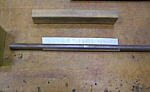
Let the rolling begin.
|
|
Click on Pix for high resolution.
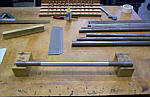
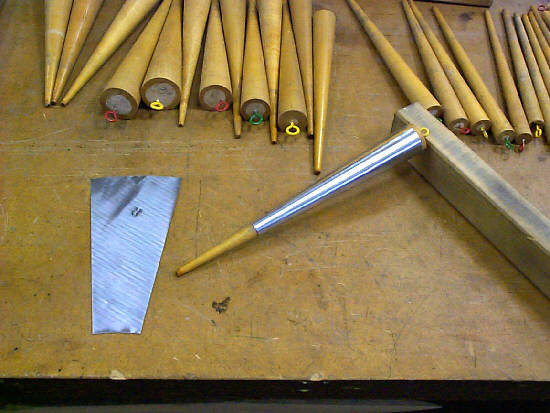
Resonator is now rolled.
|
Click on Pix for high resolution.
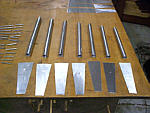
All resonators have been rolled.
|
|
Click on Pix for high resolution.
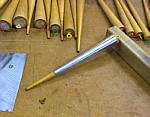
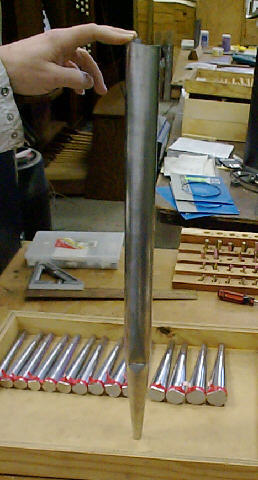
Next, the feet are rolled into shape.
|
Click on Pix for high resolution.
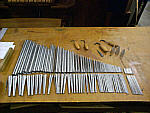
The Larigot resonators and feet are now ready to have their seams soldered.
|
|
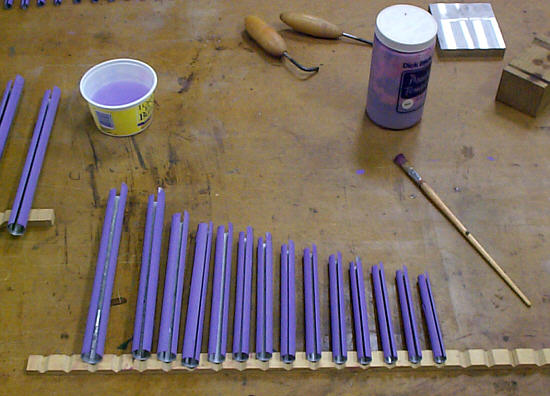
Click on Pix for high resolution.
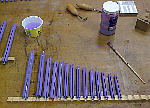
Sizing (tempura) has been applied to protect the
pipe from heat during the soldering process
|
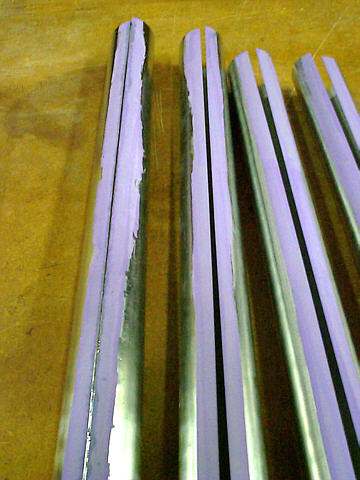
Click on Pix for high resolution.
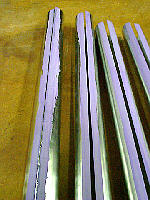
The first pipe has been soldered.
|
|
Click on Pix for high resolution.
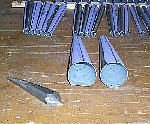
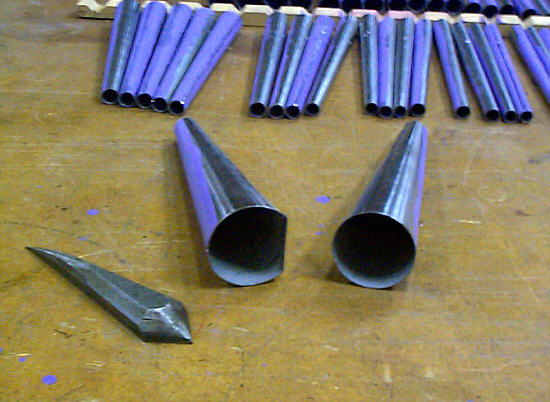
Now it is time to press (shape) the mouth
of the pipes into the resonators and toes.
|
Click on Pix for high resolution.
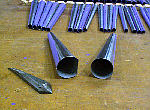
Pipe on the left has had it's
mouth pressed in.
|
|
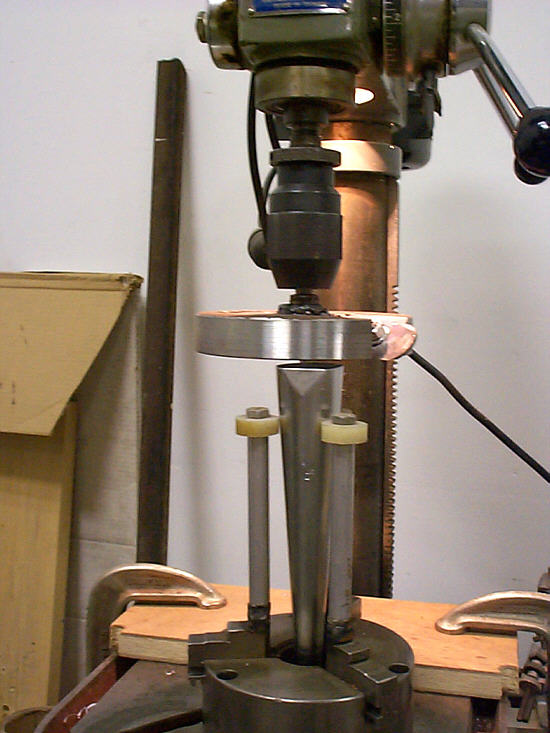
Click on Pix for high resolution.

Pipe on the left has had it's
mouth pressed in.
|
Click on Pix for high resolution.
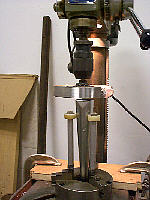
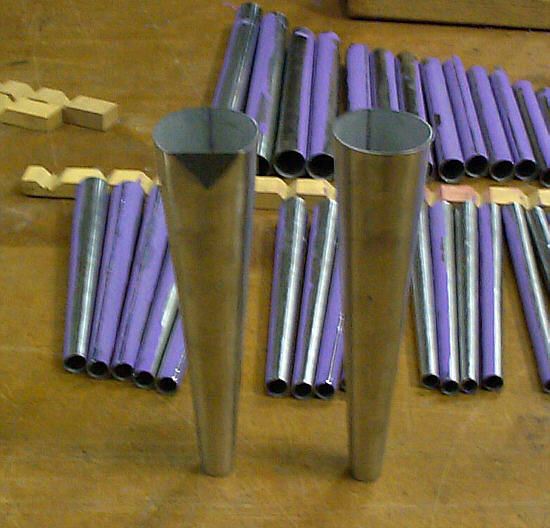
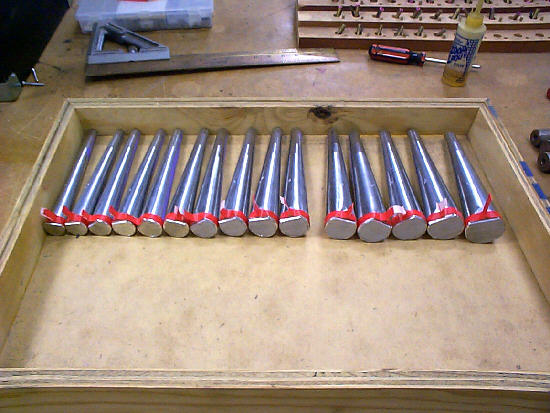
The tops of the toes must be cut flat
do to distortion during manufacturing.
|
|
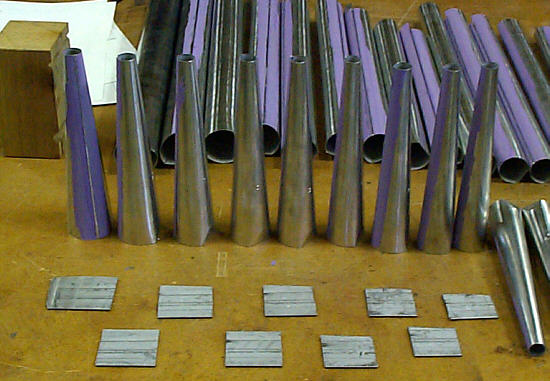
Click on Pix for high resolution.

The next process is to cut out the
languids that will be soldered on the
tops of the toes. Metal pcs. have been
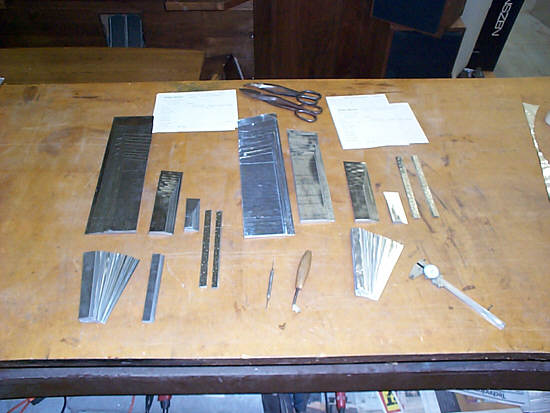
cut and marked for triming to size.
|
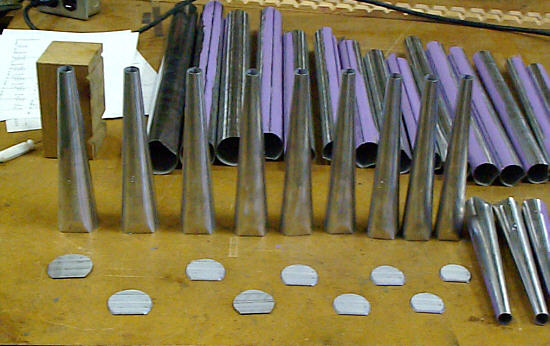
Click on Pix for high resolution.
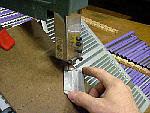
Trimming the languid metal into the
shape of the toe that it is to be fitted
to.
|
|
Click on Pix for high resolution.
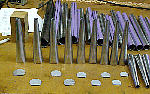
Bass languids are cut and ready
for soldering.
|
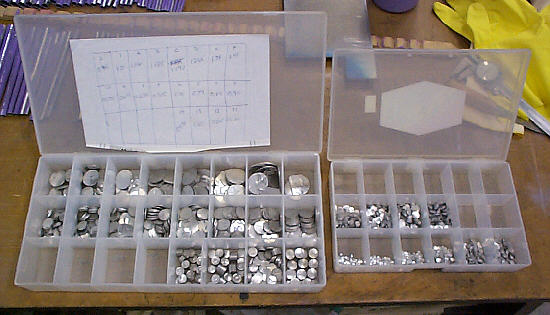
Click on Pix for high resolution.
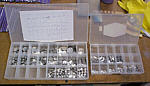
The languids for smaller pipes
are pre-made in bulk and selected
to fit it's toe.
|
|
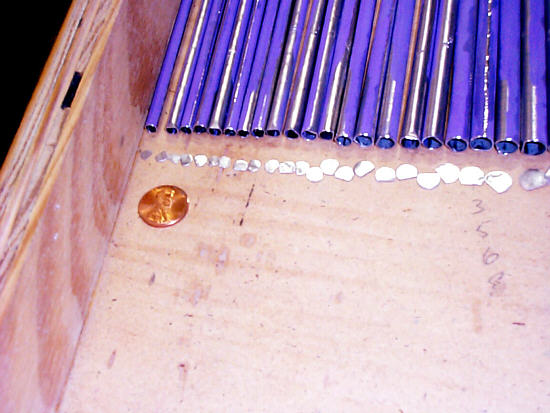
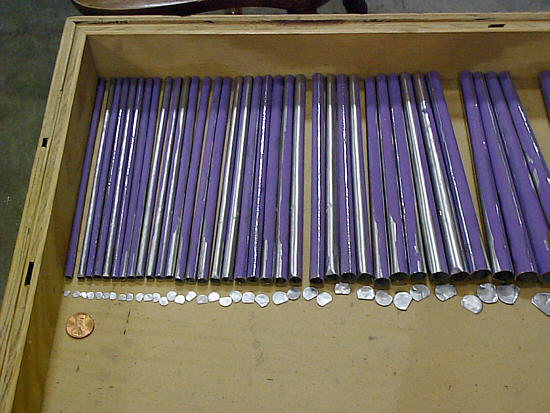
Click on Pix for high resolution.
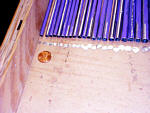
Some languids get pretty tiny.
That's a penny next to languids.
|
Click on Pix for high resolution.
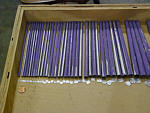
There are 61 languids in this
rank of pipes.
|
|
Click on Pix for high resolution.
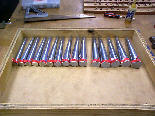
The languids are soldered in place.
|
Click on Pix for high resolution.

The first resonator is soldered on.
Now the ears get put on and the
pipe washed. It is then ready to be
voiced.
|
|
02/28/2001
Now that that Tierce and Larigot ranks have been completed, the last week has been spent cutting out the 220
pipes of the Great III - IV rank Mixture stop.
The Mixture stop breaks on each C of the keyboard.
The composition is as follows:
| Note# |
Rk #1 |
Rk #2 |
Rk #3 |
Rk #4 |
| C1 |
1-1/3' |
1' |
0-2/3' |
na
|
| C2 |
2' |
1-1/3' |
1' |
na
|
| C3 |
2-2/3' |
2' |
1-1/3' |
1' |
| C4 |
4' |
2-2/3' |
2' |
1-1/3' |
| C5 |
8' |
5-1/3' |
4' |
2-2/3' |
|
Click on Pix for high resolution.
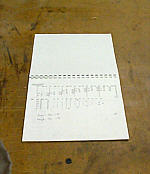
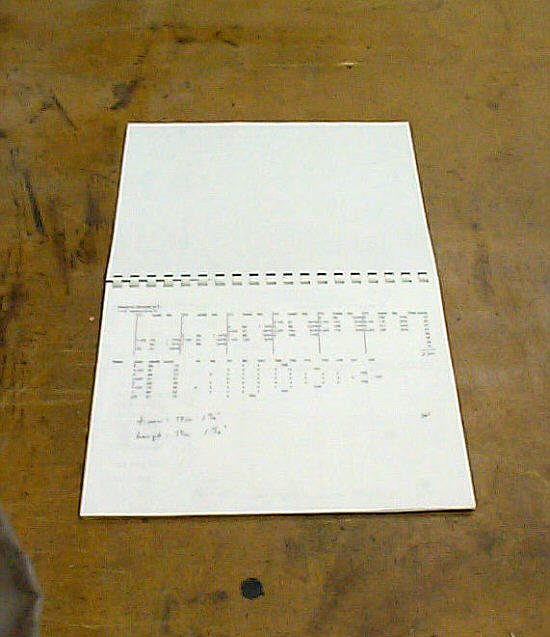
Do to the complexity of building a Mixture stop
it is necessary to compile a 19 page document
to describe it's architecture for use during construction.
Click on Pix for high resolution.

|
|
Click on Pix for high resolution.
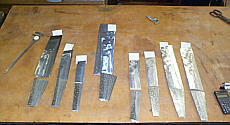
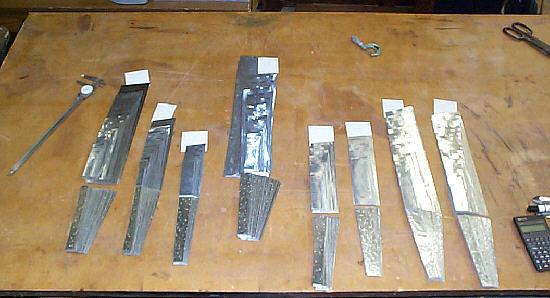
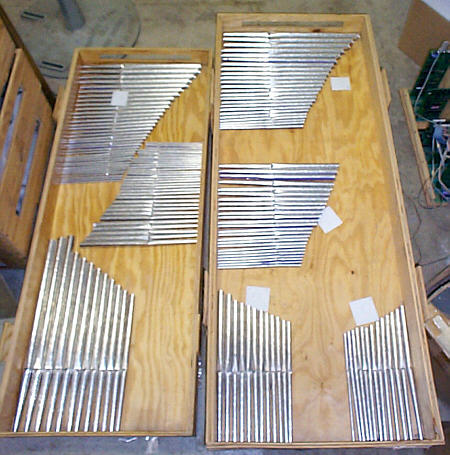
There are 220 pipes distributed amoung eight pitches.
The pipes are ready to be labeled, rolled and soldered.
|
Click on Pix for high resolution.
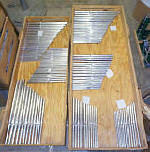
Here is the completed Mixture III-IV
pipes ready for voicing.
|
|
Click on Pix for high resolution.
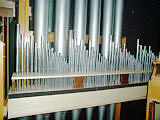
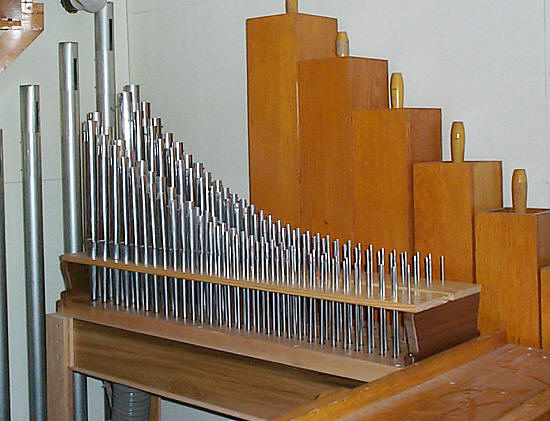
The Mixture installed in the Great chamber.
There are four groups of pipes that are
layed out in 3rds.
The 1st pipe in the 1st group is C.
The 1st pipe in the 2nd group is C#.
The 1st pipe in the 3rd group is D.
The 1st pipe in the 4th group is D#. |
|
Click on Pix for high resolution.

View of Tierce and Larigot ranks
installed in Swell division.
|